Table of Contents
- Introduction: Why Box structure design packaging Matters
- What Is Box Structure Design Packaging?
- Key Principles & Components of Box Structure Design
- 3.1 Dielines, Creases & Fold Lines
- 3.2 Flaps, Tabs & Glues
- 3.3 Material Properties & Strength
- 3.4 Internal Supports, Dividers & Inserts
- 3.5 Closing Mechanisms & Unboxing Experience
- Types & Styles of Box Structures
- Regular Slotted Container (RSC) & Corrugated Boxes
- Folding Cartons
- Rigid / Setup Boxes
- Specialty Boxes: Pillow Boxes, Nested Boxes, etc.
- Trends & Innovations in Structural Box Design
- Best Practices & Tips for Box Structure Design Packaging
- Applying Your Fonts to Packaging Mockups
- Funnysamurai Sans Serif
- Perky Area Slab Serif
- Botnet Font
- Testing, Prototyping & Manufacturing Considerations
- Conclusion & Next Steps
- References
1. Introduction: Why Box structure design packaging Matters
Box structure design packaging plays a crucial role in how customers perceive and interact with your brand. Great packaging isn’t just about visuals — it’s about creating an experience that reflects your brand’s value and identity. It protects, displays, communicates quality, and influences the unboxing experience. Without a well-engineered box structure, even great graphics or branding may fail because the box could collapse, open unintentionally, or misalign. Structural design is often called the “bone and muscle” of a package: invisible but essential.
For your business, using premium fonts and beautiful design is an advantage — but only if the packaging holds up. A disheveled box cheapens perception, no matter how strong your visual branding.
2. What Is Box Structure Design Packaging?
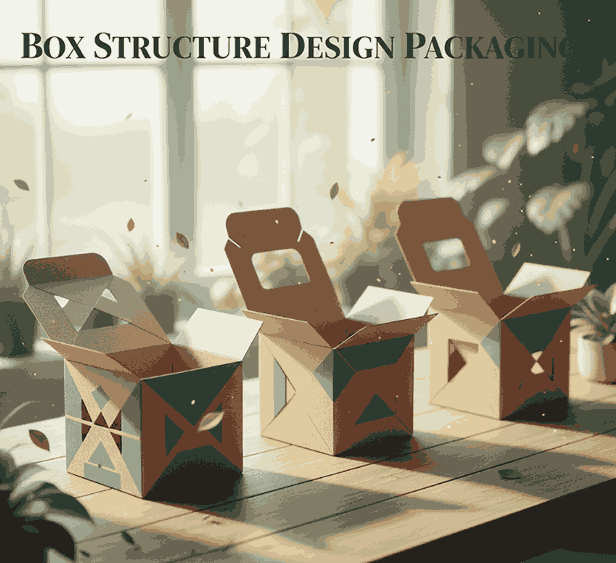
Box structure design packaging refers to the architecture behind how a box is constructed: how panels, folds, flaps, connections, and materials come together to form a functional, manufacturable container. It includes the dieline (flat plan), scoring (where folds occur), and the interactions of parts when assembled.
It’s more than aesthetics — it’s about ensuring the package can be folded reliably, stacked, shipped, and opened by the user.
3. Key Principles & Components of Box structure design packaging
3.1 Dielines, Creases & Fold Lines
A correct dieline defines where the box is cut, folded, and glued. Precision is critical; misaligned creases or folds can ruin structural integrity or lead to problems in mass production.
3.2 Flaps, Tabs & Glues
The flaps (top, bottom, side) must interlock or overlap. Tabs and locking mechanisms secure the form. The selection of glue or closure (hot melt, tape, water-based adhesive) affects durability and assembly.
3.3 Material Properties & Strength
The thickness, rigidity, and flex of carton, corrugated board, or rigid substrates determine how well the structure holds underweight, stacking, or pressure. For example, corrugated box designs must consider stacking strength, compression, and moisture resistance.
3.4 Internal Supports, Dividers & Inserts
For delicate or multiple parts, internal structure such as partitions or foam inserts help hold components in place, reducing movement or damage during transit. Structural design services often specialize in custom inserts.
3.5 Closing Mechanisms & Unboxing Experience
Closures matter: magnetic flaps, friction fits, snap locks, tuck flaps. The way a box opens influences user delight, retention, and perceived value.
4. Types & Styles of Box structure design packaging
Regular Slotted Container (RSC) & Corrugated Boxes
The workhorse of shipping, corrugated boxes are engineered for strength, stacking, and protection. Many are designed with internal supports or layers.
Folding Cartons
Lightweight, often used in retail packaging (beauty, electronics). They fold flat, shipped as blanks. The structure must trade strength and aesthetics.
Rigid / Setup Box structure design packaging
Often premium, these do not fold. Made from thick boards. Used for luxury packaging, gift sets, or boxed media.
Specialty Boxes: Pillow Boxes, Nested Boxes, etc.
Pillow boxes have curved forms; nested boxes stack inside one another. Origami-style boxes and creative structures are emerging in packaging innovation.
5. Trends & Innovations in Structural Box structure design packaging
- Eco & Minimal Material Use — optimizing structure to reduce material waste
- Smart Unboxing — hidden flaps, reveal stages, layered structures
- Hybrid Materials & Reinforcements — combining paper with plastic, rigid inserts
- Adaptive/Collapsible Structures — boxes that change form or collapse for returns
- Computational Design Tools — CAD, parametric modeling, simulation for folding & stress
These innovations allow boxes to be beautiful and functional.
6. Best Practices & Tips for Box Structure Design Packaging
- Start from the product’s geometry — dimension, weight, fragility
- Prototype early & iterate — real folds and mockups reveal issues
- Balance cost vs performance — avoid overengineering
- Consider manufacturing tolerances — machine variation, glue bleed, misalignment
- Design for stacking & shipping — consider compression, vibration
- Use structural software tools — e.g. ArtiosCAD for folded box design
7. Applying Your Fonts to Box structure design packaging Mockups
Typography adds the brand voice on structure. Use your premium fonts to elevate how the box communicates:
- Funnysamurai Sans Serif Font — clean, bold, great for brand names and headings.
- Perky Area Slab Serif Font — strong slab serif, adds character to product names or taglines.
- Botnet Font — modern, edgy, good for tech-style lines or accent text.
On a mockup, you can overlay your font onto the dieline or the box panel surfaces; use contrast and hierarchy so the structure still reads cleanly when printed.
8. Testing, Prototyping & Manufacturing Considerations
- Physical prototypes — folded real material to validate structure
- Stress tests — drop tests, compression, stacking
- Mock shipping tests — simulate transit conditions
- Color consistency & registration — aligning artwork to structure
- Production constraints — die cutting, tolerances, glue application
Only after testing structural robustness should you move to full production.
9. Conclusion & Next Steps
Box structure design packaging is the foundation of successful packaging. It ensures protection, displays your brand, and influences customer perception. By combining structural engineering with strong typographic branding (using your fonts), you can deliver packaging that sells and delights.
Next steps for Edric Studio:
- Pick a product (e.g. boxed font collections, USB font drives)
- Draft structural dielines, overlay mockup fonts
- Prototype & test, then refine
- Document your structural specs (dieline files) for production
10. References
- Superior Packaging & Finishing — The Importance of Structural Design in Packaging
- PackMojo — Structural Design for Packaging & Inserts
- Wikipedia — Corrugated Box Design